


Why Is It So Hard to Let Someone Serve You?
October 8, 2026
Read More

“Have you never, in the dying embers of a Sunday night, rested your head on the pillow with wet eyes because the day of congregating in the presence of God does yet not last forever?”
- Sinclair Ferguson
A vital lesson for any disciple of Jesus to embrace is this: It is imperative to set aside ample time for personal devotion-—to touch the floor with your face as you fall down to adore Him, to extend your hands high so as to reach His very throne room, to make melodies from whatever tune flows up from your heart—all of which combined generate more than ample wind to fan the flames of revival in your soul, preventing the embers there from ever growing cold.
The Bible defines these things as "worship"; or as I prefer to phrase it, “entering His visitation.”
.png)
One of the most gifted preachers of all time was Charles Spurgeon, who defined revival as “to kindle into a flame the vital spark which was nearly extinguished.”
All revivals and awakenings the world has ever known were birthed and bathed in worship. A.W. Tozer exclaimed: “Listen to me! Practically every great deed done in the church of Christ all the way back to Apostle Paul was done by people blazing with the radiant worship of their God.”
Conversely, and not surprisingly, all revivals and awakenings that faded over time began to do so the minute worship was abandoned.
Allow me to paint the following picture:

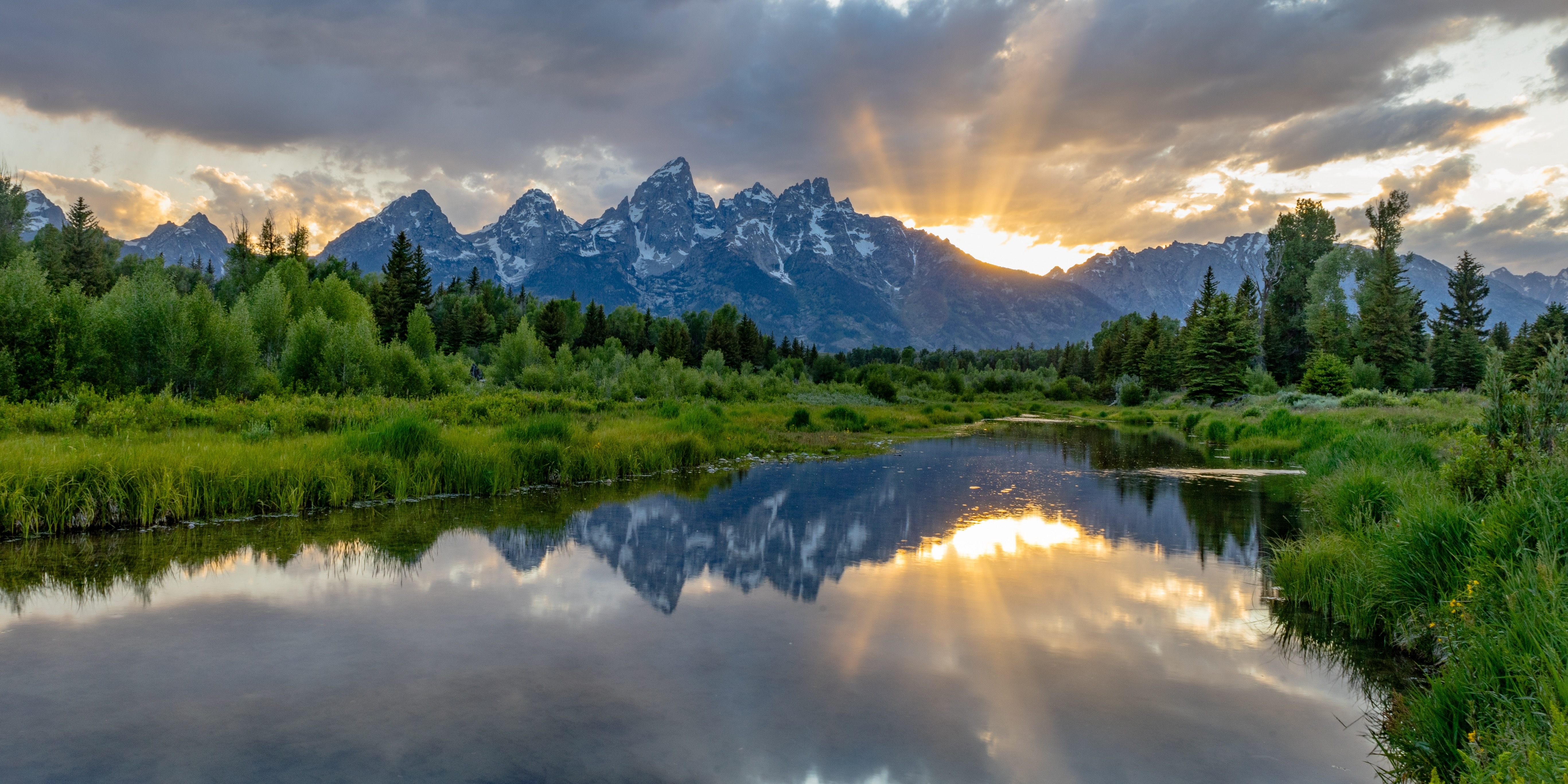
Picture yourself going out for a run, along a scenic route perhaps, maybe an oceanfront or a beautiful valley. At a given point, as you are praying and thanking God for His goodness, you sense that you’ve run up on something far greater than yourself. Stopping to stand in awe does have its place, as Wallace Stegner remarked while gazing at the Teton Mountain Range: “We need that wild country, even if we never do more than drive to its edge and look in.
”However, I would contend, and I do believe sound theology backs me up on this, that God strategically placed those “far greater than yourself” stations at precise locations along your path; much like water stations set up for runners in a race. It’s no coincidence that you happen to run upon them when thirsting the most.
He did so with a far greater purpose than for you to contentedly stand on the edges looking in.
How bizarre it would be to run past a water source without stopping to drink your fill? How much more bizarre it would be to run past The Messiah Jesus and The Holy Spirit as they call out to you: “The Spirit and the bride say, 'Come.’ And let the one who hears say, ‘Come.’ And let the one who is thirsty come; let the one who wishes take the water of life without cost” (Rev. 22:17).
Should you heed that call, once you enter that aforementioned “wild country,” it instantaneously becomes sacred ground on which you stand. For ground to become sacred, pews aren’t necessary, nor are church buildings mandatory. Jesus Himself taught that even the open air is conducive to worshipping “in spirit and in truth” (Jn. 4:23). Wherever that place of meeting occurs between down here and up there, where His nearness comes closer as He invites us in, and we “draw nigh” unto Him, as a symbolic and fitting gesture you might feel inclined to remove your sandals as you stand in His presence. Now that’s why I define worship as “entering His visitation.”
In moments like these, something about being here on earth doesn’t feel quite right, and a type of heavenly homesickness overcomes me, leaving me to ask, "When will I be able to come back home?"
Soon enough, I suppose.
I’ll rest in hopeful expectation until then.
Free: Chapter 1 of The Four Faces of Christ (PDF) · Get new articles by email every Thursday


