


Thank You, Jesus, for Desegregating the Deep South!
July 16, 2026
Read More
I believe so.
Christ declared it was the right thing to do for His followers to give generously. But He never commanded a specific percentage or amount. It was ALWAYS, a matter of the heart. The human heart inclines itself towards greed. But it’s the work of the Holy Spirit that changes the posture of why we give.
Suppose I decide to give until it hurts. That may sound noble, but it actually misses the point. If giving hurts at first, then maybe we should consider giving until it becomes a joy.
Scripture says, "God loves a cheerful giver." The Greek word behind "cheerful" is hilaros—from which we derive our word hilarious. The more delight we take in giving, the more it reflects the heart of Christ.
I remember telling one of my sons to put away his toys when he was little. He obeyed—but only outwardly. He grumbled the entire time, complaining with every toy he picked up. The toys eventually made it into the bin, but was that genuine obedience? Not really. God’s ultimate concern is the motives behind what we say and do. This is where socialism begins to fall apart.
In a classroom, or theoretically, it sounds wonderful to imagine a society in which everyone willingly shares and everyone has enough. But eventually one unavoidable reality enters the equation: sin.
That’s the problem because “The heart is deceitful above all things and beyond cure. Who can understand it?” (Jeremiah 17:9).
Every political and economic system must eventually contend with that fact.
Utopia will never exist on earth. Ever. That reality is what entices us to long expectantly for a promise of a new heavens and the new earth. All will be well then. But what do we do until then?

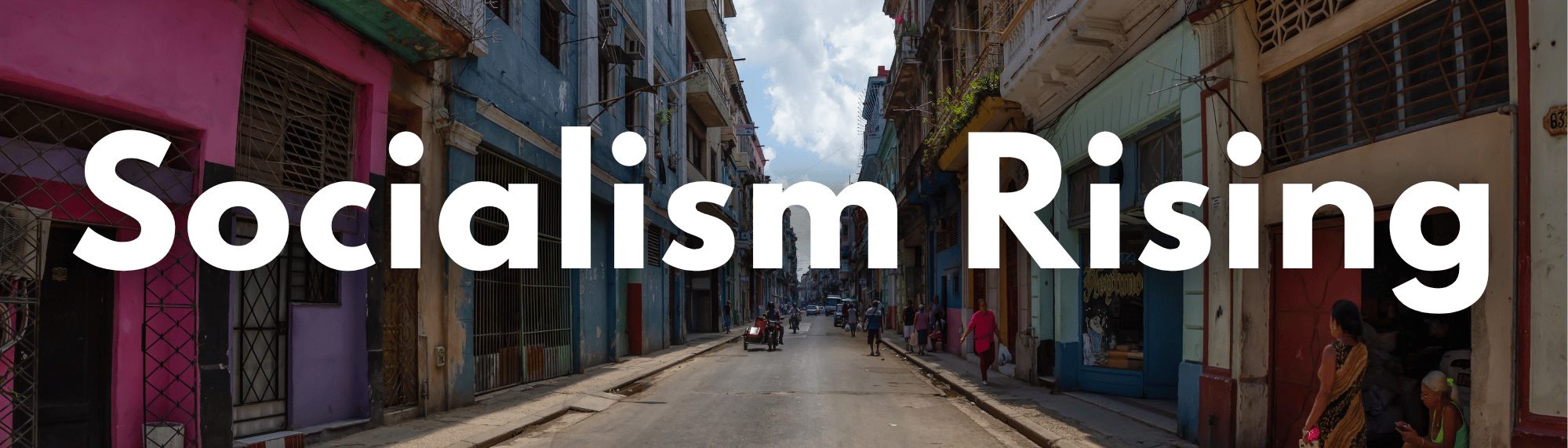
I’ve travelled to Cuba more than forty times.
On paper, healthcare is free. All I ask you to do is speak with someone who has actually lived in Cuba. Ask them what price they end up paying to supposedly maintain their health? A lot.
Cuban physicians are remarkably skilled and dedicated, yet they often lack basic medicines, equipment, and supplies. The problem is not the doctors; it is the system.
What about higher education that is free for all? The Cuban people are absolutely brilliant—without question. They are among the smartest people in the Western Hemisphere. But what happens after graduation? Let's say you finish at the top of your class in medical school. Depending on the year, you'll earn around $45 a month—often not enough to buy a decent pair of shoes.

And here’s the big-ticket item that catches everyone’s attention—free food. You must be kidding me! Government rations exist, but they provide only a fraction of what a family needs each month. Ask Cuban families when they last enjoyed a glass of milk, a slice of cheese, or a fresh loaf of quality bread. For many, those foods have become rare luxuries.
Surely there is an abundance of pre-natal vitamins, formula and diapers for babies. Think again.
So how do people survive the rest of the month? Especially since they do not possess the freedom to legally start a new business of their choosing? It’s next to impossible. And please note, all of these failed promises began long before the current sanctions.
One additional observation I'll expand on later: many high-ranking officials I have encountered hold an absolute disdain for the common people. It sits all over them. Ironically, the revolution promised to elevate the common man, yet too often the common man remains the one paying the highest price.

I believe it is the one that allows men and women the freedom to buy, sell, and trade in an open market.
Can a case be made from Scripture? I believe so. Consider just a few examples.
Throughout the Bible, buying, selling, wages, contracts, vineyards, fields, livestock, and inheritances are simply assumed as part of everyday life.
The excellent wife in Proverbs 31:
In other words, she was an entrepreneur.
Jesus' Parable of the Talents (Matthew 25:14–30) commends wise stewardship, investment, and productive enterprise.
The Eighth Commandment—"You shall not steal"—assumes the legitimacy of private property.
And perhaps the clearest example comes from Acts 5. Peter tells Ananias:
"While it remained unsold, did it not remain your own? And after it was sold, was it not under your control?"
Peter's rebuke was not that Ananias kept part of the money. It was that he lied. Both the property and the proceeds belonged to him.
At the end of the day, socialism is a failed experiment. No different than Murphy’s Law. Free markets are certainly susceptible to greed—without question. Sin eventually corrupts every human institution. Yet some systems better recognize human liberty and allow men and women to live, work, and have their being. I’m thankful to be a citizen in one of them. What about you?
Jesus said, "For those who have ears to hear, let them hear."
Free: Chapter 1 of The Four Faces of Christ (PDF) · Get new articles by email every Thursday


