


Thank You, Jesus, for Desegregating the Deep South!
July 16, 2026
Read More
Guest post with Ty Dodge
George:
With wars in the news around the world, I’ve been thinking about the men and women who actually fight them. My friend Ty Dodge was 24 years old when he led a platoon of the 11th Armored Cavalry Regiment in Vietnam in 1969. He recently sent me a stack of his stories, and I want to share two of them with you. One takes place in October of 1969, fifty-seven years ago this month.

Ty:
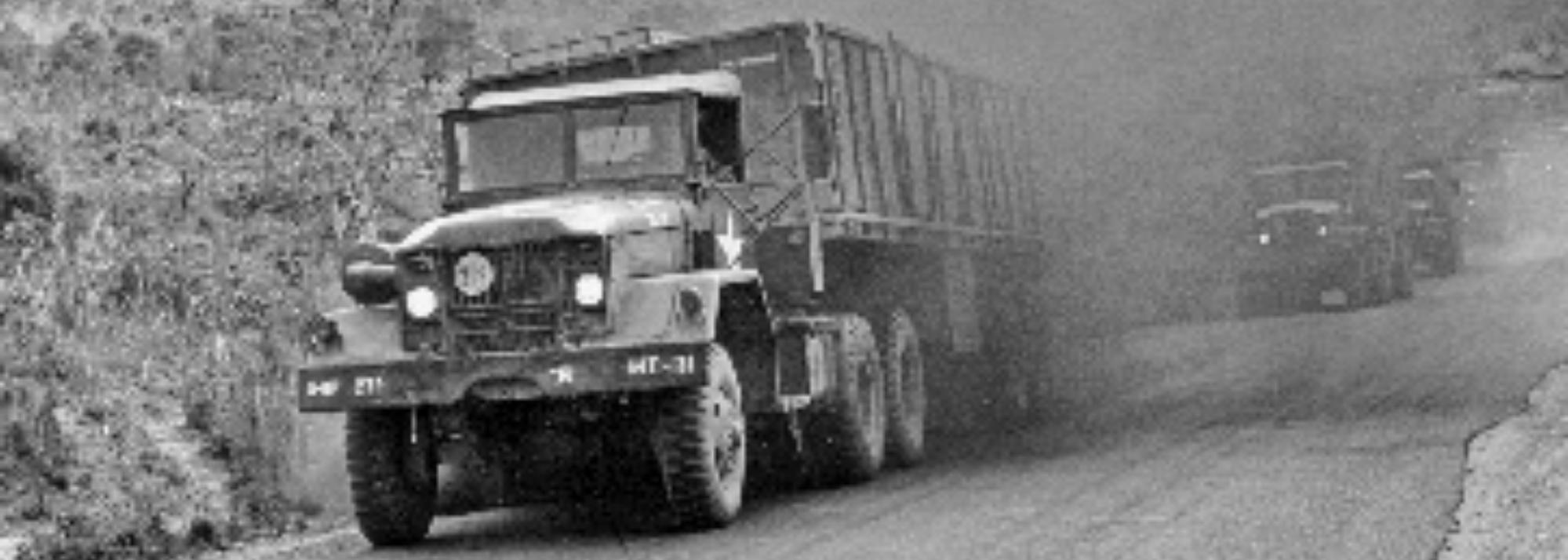
First light, and my platoon was cruising up Highway 13, “Thunder Road.” Six Armored Cavalry Assault Vehicles, three Sheridan tanks, and twenty-seven Blackhorse troopers looking for a fight—trying to spot any sign of enemy activity near the town of An Loc, South Vietnam. Just another day at The War.
As my third track rounded a bend, the enemy opened fire from our right! We’d been ambushed! RPGs flashed by, machine gun bullets thudded into our tracks, and AK-47 rounds whined around our heads! It seemed the whole war was being fought right along that quarter mile stretch of Thunder Road!
In the intensity of the moment, a man’s first reaction is to hit the gas and escape the kill zone. That’s what we might have done had we been providing security for a convoy. And, with guns blazing, that could have been a right answer.
But we weren’t with a convoy. We were looking for Charlie. So, having gotten past the first impulse to break out of the kill zone, our second reaction might have been to hang a hard right, charge the enemy, and destroy him.
That day, though, both solutions would have been wrong. Had we chosen the first—to hit the gas and escape the kill zone—we’d have run into an even more ferocious kill zone just up the road. They were hoping we’d do that. The second option—to hang a hard right and charge—would have been every bit as bad. Five meters off to the right, Charlie had planted a mine field just for us. And quietly secluded to the left of the road was another enemy force hoping we’d turn our backs to them.
Fortunately, my guys knew just what to do. They hit the brakes and swung into a herringbone formation—the first track facing right, the second left, and so on—then unleashed the fury of fifteen M-60 machine guns, nine .50 caliber machine guns, and three main tank guns.
What could have destroyed 3rd platoon became a disaster for Charlie. In less than seven minutes, our attackers were in full rout. Fifteen enemy lay dead. The rest were bookin’ it for the border as fast as their Ho Chi Minh sandals would take them. No friendly killed or wounded.
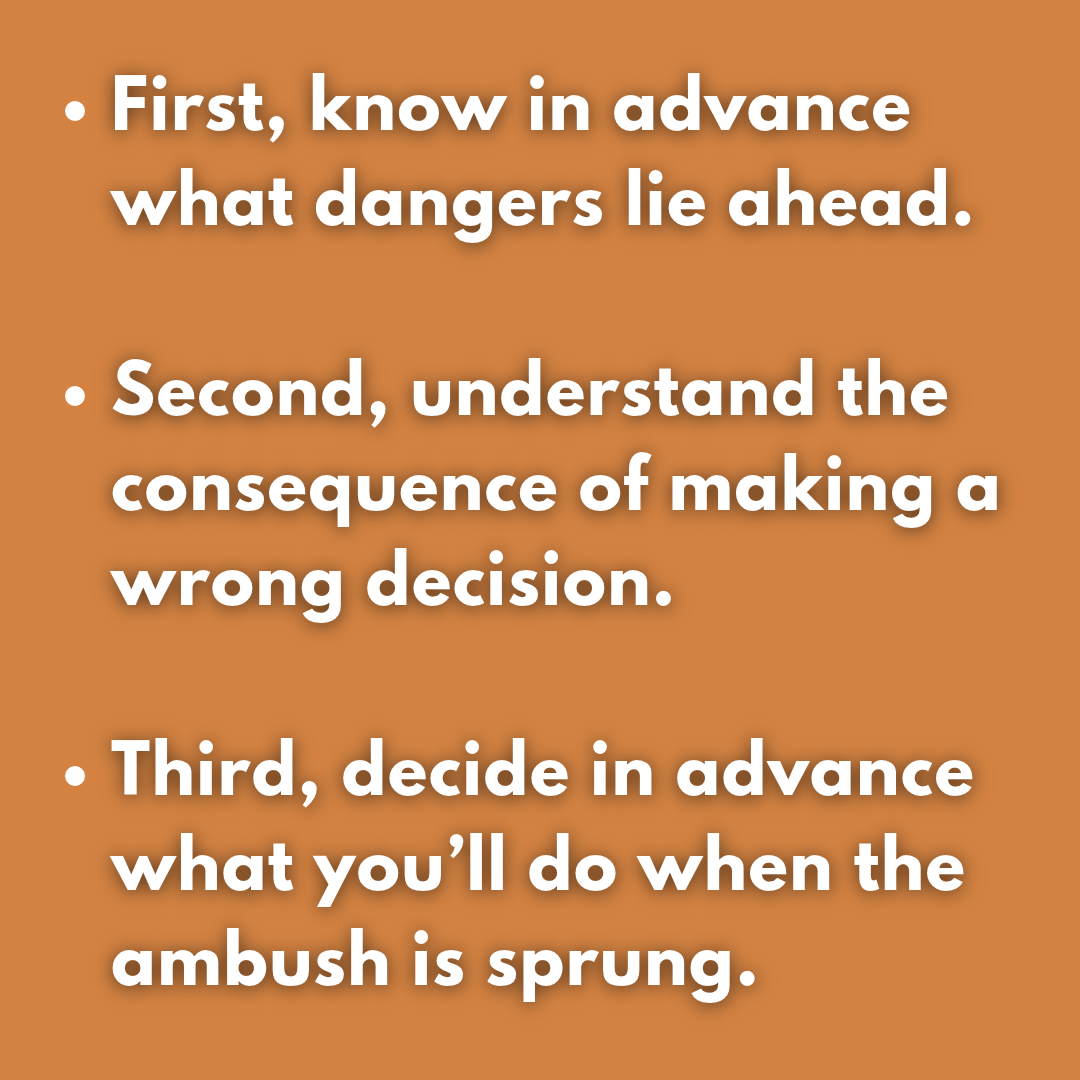
It didn’t always turn out that way, but we were ready for this one. Not only well trained, but mentally prepared. We knew in advance what to do.
George:
Can you imagine? Every instinct said hit the gas or charge, and either one would have driven them straight into a second trap.
Here’s something else you might not know about Ty. Before he ever led men in Vietnam, he trained them. And one of those trainees ended up teaching Ty.
Ty:
Fort Jackson, South Carolina. 1968. My first duty station as a new second lieutenant. I was the training officer of a basic combat training company of new recruits.
Most of them worked within the system and tried hard. But there were a few who just didn’t fit in. They bucked the system in every way. One of them stood out. He’d been in and out of jail since he was a kid, his mother had thrown him out, and he hadn’t seen his father in years. So, he came into the Army with an attitude. After a couple of weeks spending one-on-one time with him to little effect, I sent him to The Beach.
The Beach, a long sandbar on the Wateree River, instilled a bit of fear in even the most hardcore of the hard cases. At The Beach, unmanageable trainees spent long hours and hot days doing grueling PT to the encouragement of raging drill instructors. It was anything but pleasant. But typically an effective rehabilitation tool. And when I transferred out of Fort Jackson, he was still on The Beach.
Fast forward a year or so to October 1969. I was commanding an armored cavalry platoon in Vietnam, and my platoon was providing security for a 300-truck supply convoy running north through the Central Highlands. An hour into our run, I stopped the convoy for a break. When I did, the lieutenant in charge of the truck unit walked up to me and said, “You’re Lieutenant Dodge, aren’t you?” He looked vaguely familiar, so I took the bait. “Yes, I am.”
Sticking his hand out to me, he said, “I’m Jim Carter, and you were my training officer at Fort Jackson. Last I saw you I was spending a little time on The Beach. Since then I’ve been to OCS (Officer Candidate School) and I’m planning to make the Army my career.”
Could have knocked me over with a feather. Here was a guy I thought would never make it in life, but—with the help of some tough love and a few people who saw potential in him—had turned himself into a success story.
Thanks, Jim, for the lesson.

George:
I’m betting most of us have spent some time on The Beach. Nobody signs up for it. But the writer of Hebrews didn’t sugarcoat it: “No discipline seems pleasant at the time, but painful. Later on, however, it produces a harvest of righteousness and peace for those who have been trained by it.” (Hebrews 12:11). Jim Carter is proof positive.
Here’s the thing. Thunder Road works the same way. Ty’s platoon had settled what they would do long before anybody fired a shot, and Paul told the Corinthians that God “will also provide the way of escape, that you may be able to endure it” (1 Corinthians 10:13).
Paul told Timothy that “No soldier in active service entangles himself in the affairs of everyday life, so that he may please the one who enlisted him as a soldier” (2 Timothy 2:4). And Peter wrote, “Be of sober spirit, be on the alert. Your adversary, the devil, prowls around like a roaring lion, seeking someone to devour” (1 Peter 5:8).
As you and I cruise the Thunder Roads of our lives, we’re ambushed by all kinds of things: drugs, alcohol, debt, pornography, that flirtatious co-worker at the office, workaholism, pride, greed … well, you get the picture. And all too often in the heat of battle we make the wrong choices and decisions. And then we hang a hard right and charge headlong into oblivion. Or run, unwittingly, from one ambush into another.
But it doesn’t have to be that way. There’s a solution outrageously simple. And, perhaps, painfully obvious.
Think about it. When you and your family leave home today, you’ll be going to work, and to school, and to play on Thunder Road.
Will you be ambush-proof?


