


Verbal Pollution & Komodo Dragon Venom
August 20, 2026
Read More
.png)
With the Summer Olympics approaching, millions will watch the world's greatest runners explode from the starting blocks. In track and field, however, there is one mistake from which there is no recovery:
A false start.
.png)
Peter, the former fisherman turned apostle, rarely operated according to the familiar command, "On your mark... get set... GO!" His version was more like, "On your mark... GO!... now get set!" He had a habit of launching first and preparing later.
Reading the four Gospels, Peter seemed incapable of mastering the art of the blind handoff. In a relay race, the outgoing runner begins sprinting before ever seeing the baton, trusting the incoming runner to place it securely into an outstretched hand. The entire exchange is designed to maximize speed without sacrificing possession.
Peter had a habit of taking off without the one thing that mattered most—the baton.
The result was almost always the same: a false start. Forget the handoff; he just ran.
.png)
Legendary Olympian Jesse Owens once observed, "Life doesn't give you all the practice races you need."
Few biblical figures prove that point better than Peter.
His early ministry seemed plagued by one potential ministry-ending false start after another.
A Washington Post article covering the Rio Olympics called track and field's one-false-start rule "the cruelest rule in Olympic sports." One runner twitches a fraction of a second too soon, and that's it. No warning. No second chance. Years of preparation disappear in an instant.
French hurdler Wilhem Belocian experienced exactly that in Rio. Four years of Olympic training were over a millisecond too soon.
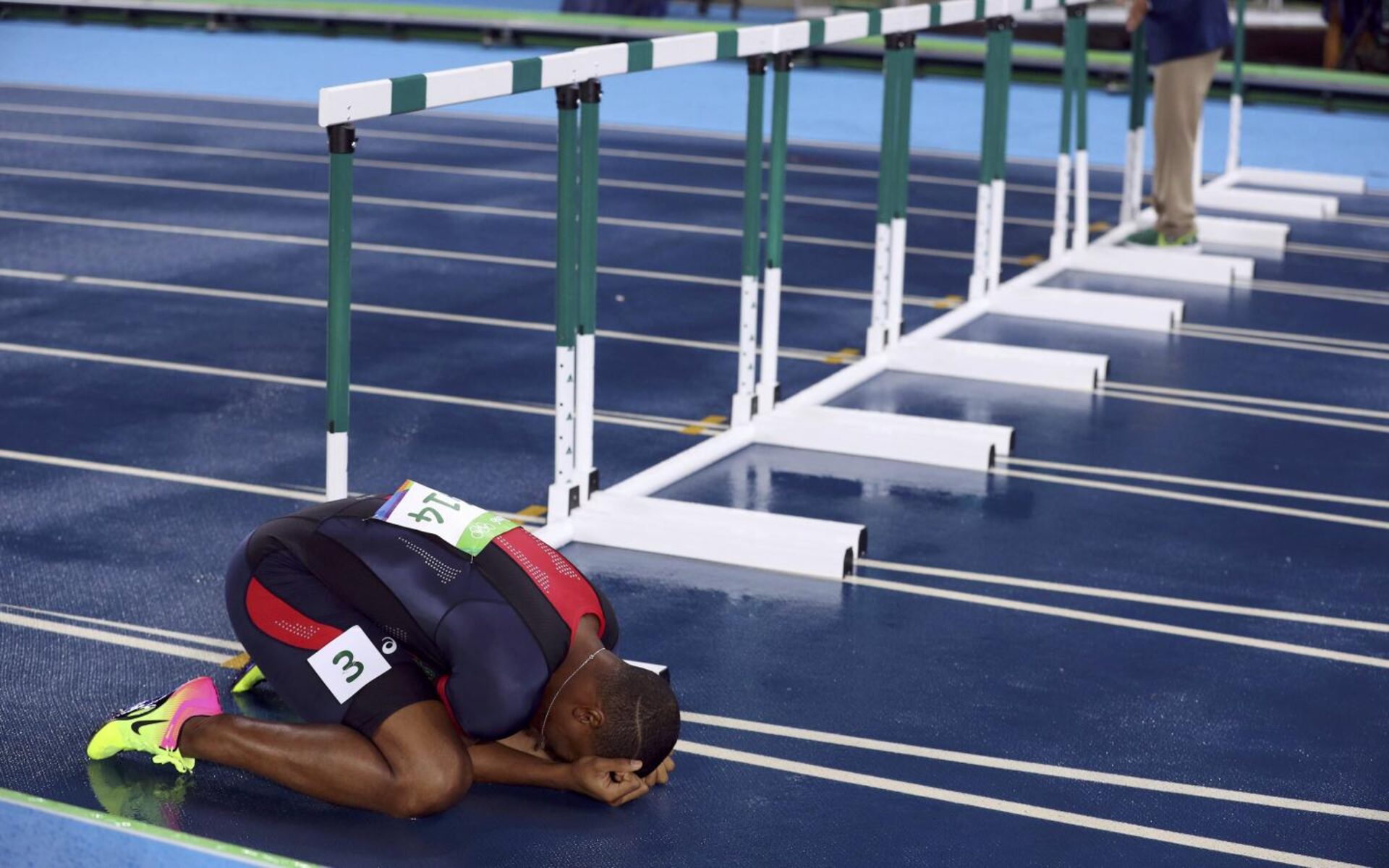
Peter himself would later write from firsthand experience:
"The Lord is not slow about His promise, as some count slowness, but is patient toward you, not wishing for any to perish but for all to come to repentance" (2 Pet. 3:9).
God certainly has the right to settle accounts immediately, just as Olympic officials enforce the one-false-start rule. Yet in His longsuffering, He often extends mercy instead of immediate judgment.
Peter desperately needed that mercy.
Who could forget the embarrassing moment when Peter actually rebuked Jesus for predicting His own suffering and death?
"Peter took Him aside and began to rebuke Him, saying, 'God forbid it, Lord! This shall never happen to You.' But He turned and said to Peter, 'Get behind Me, Satan!'" (Matt. 16:22-23).
Or his bold declaration at the Last Supper:
"Even though all may fall away because of You, I will never fall away."
Only hours later, Peter denied even knowing Christ three times. Finally, "he began to curse and swear, 'I do not know this man!'... And he began to weep" (Mk. 14:71-72).
C. S. Lewis captured Peter's story well:
.png)
There is something glorious about getting up off the track after you've been knocked down and running again. Win or lose, at least you didn't stay down.
Some of you have been knocked down. Maybe Satan has tripped you up. Perhaps you've made some foolish decisions. Perhaps others have done you wrong.
When we're down on the track, we're embarrassed. We're ashamed. At times we feel sorry for ourselves. We grow discouraged. Sometimes we just feel like staying on the track.
But the only real shame is staying there.
God's word to you is simple: "Get up and run!"
Forget those who have wronged you. Forget what lies behind, and run for the prize of the high calling of God in Christ Jesus.
You still have a race ahead of you.


