


The Tour de France & Finishing Strong
July 23, 2026
Read More

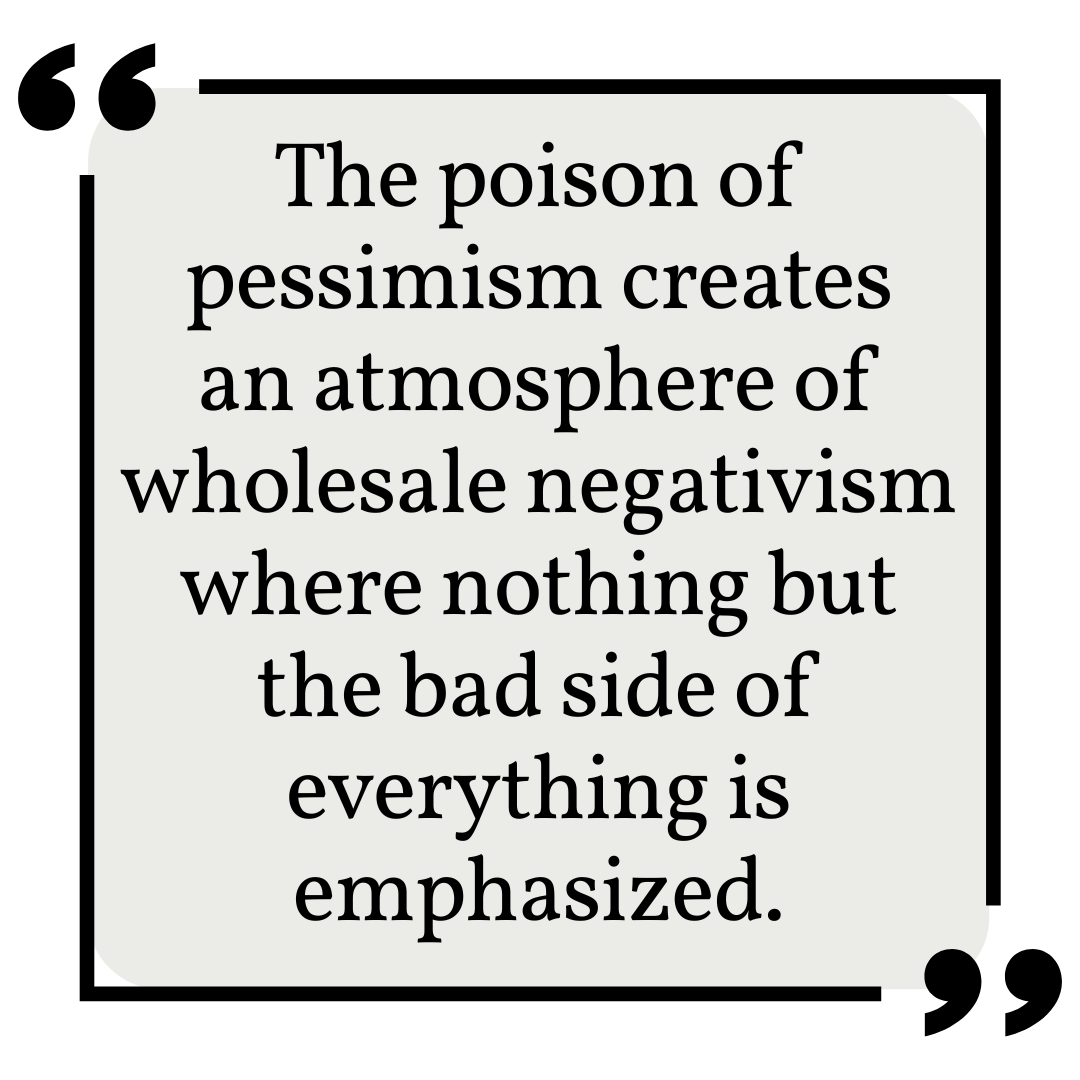
What a frustrating problem pollution is! It comes in many forms, but one type is often overlooked. Charles Swindoll calls it "verbal pollution," passed around by grumblers, complainers, and criticizers.
Swindoll tells of a group of Christian friends who became concerned about this form of pollution and the part they played in it. So they made a pact to avoid critical words for an entire week.
They were surprised to discover how little they spoke! As they continued the experiment, they actually had to relearn the art of conversation.
Speaking of grumblers, complainers, and criticizers, no place seems to gather them together more readily than Christian circles. The irony is that, despite the numerous warnings in Scripture, as followers of Christ we should know better. If you've spent even a decent amount of time sitting in a church pew on Sunday mornings, there's an excellent chance you've heard most, if not all, of the following verses:
When James compares our words to "deadly poison," is he exaggerating to underscore the seriousness of our speech? Perhaps. But the truth behind his warning remains.

Paul writes in Ephesians 4:31:
"Let all bitterness and wrath and anger and clamor and slander be put away from you..."
That first word—bitterness (πικρία)—is especially revealing. It speaks of something corrosive, something that slowly eats away at the heart before eventually spilling out of the mouth.
Komodo dragons aren't built to outrun their prey. Instead, they stalk, bite, and then patiently follow as venom, blood loss, and exhaustion do their work. Death comes more slowly than with a king cobra, whose venom can kill in minutes, but it comes nevertheless.
Have you ever witnessed a boss, coach, parent, or teacher use harsh words to elicit a certain outcome? Sure, they may have achieved immediate compliance, but at what cost? The better question is this: Was more long-term damage done than short-term good accomplished?

Years ago, I read a newspaper article about a Michigan man who wanted to remove a tree stump from a friend's yard. He decided to use some dynamite he had stored away in his house. It certainly removed the stump. The explosion launched it like a missile. The stump traveled 163 feet before crashing through a neighbor's roof. It punched a three-foot hole through the roof, split the rafters, and crashed into the dining room below.
If we're honest, we've all been that man.
We've used explosive words hoping to solve a problem, only to create far greater damage in the process. We got the reaction we wanted, but we left destruction in our wake.

Then there’s a story Dr. Clarence Bass once told while preaching in Los Angeles.
After one Sunday service, he stood at the back of the church to greet people. One elderly gentleman walked by, shook his hand, and said, "You preached too long." A few minutes later, after making his way through the crowd, the same man returned. "You didn't preach loud enough." A few minutes later, he circled back again. "You used too many big words."
Concerned the man might continue making laps through the receiving line, Clarence motioned to one of the deacons and asked, "Do you see that little old fellow over there?" The deacon smiled and replied, "Oh, don't pay any attention to him. All he does is repeat what he hears in church."
There is more truth in that story than most of us would care to admit.
Dr. Bass concluded:
“People who repeat criticism they hear in church often become contributors to division within the church. If someone believes I need prayer, I'd much rather they pray for me than rehearse my shortcomings with everyone else. Heaven knows I'm already aware of many of my failures. I don't need people to magnify them; I need people to help me grow beyond them.”

The Bible offers no shortage of answers. The only question is whether we're willing to put them into practice.Think back over the last week. Can you recall something that came out of your mouth which wasn't honoring to Christ? Confess it. Then resolve to replace poisonous words with life-giving ones.
Proverbs 15:4
"A soothing tongue is a tree of life."
Proverbs 16:24
"Pleasant words are a honeycomb, sweet to the soul and healing to the bones."
Proverbs 25:11
"Like apples of gold in settings of silver is a word spoken in right circumstances."
If this blog struck a chord, my take away for you is simple: Make a pact to avoid critical words for an entire week. Will you accept the challenge?
Free: Chapter 1 of The Four Faces of Christ (PDF) · Get new articles by email every Thursday


