


What Does It Mean to Take Up Your Cross and Follow Jesus?
October 12, 2026
Read More

That question lies beneath far more of life than we realize, because ever since the fall, mankind has been trying to work its way back to God through effort, morality, religion, and self-improvement.
On August 5, 2010, a massive cave-in at the San José copper and gold mine in northern Chile sealed 33 miners deep underground, cutting off their route to the surface and leaving them trapped beneath thousands of feet of rock. They would remain there for 69 days, roughly 2,300 feet underground. It is difficult to comprehend just how deep that is. Imagine taking the Empire State Building, turning it upside down, and burying the entire thing beneath the earth—then stacking another half of an Empire State Building beneath it. That is how far down these men were, entombed beneath the earth.
Rescuer Manuel González was the first man to descend to them. Only after a rescuer had entered their darkness did the miners begin making the journey back to the surface. The men could not get themselves up to where their rescuers were, so a rescuer came down to them.
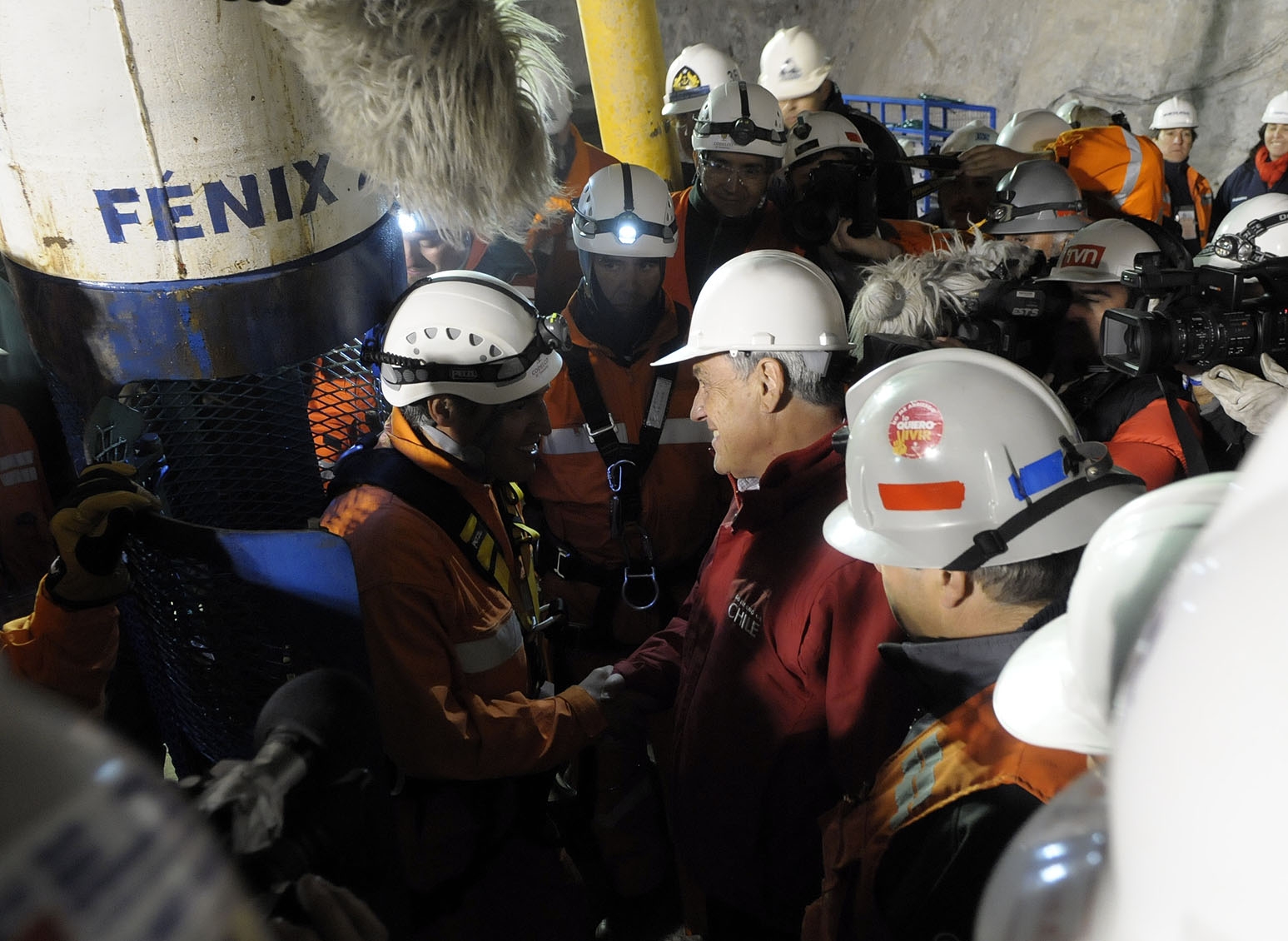
That sounds a lot to me like John 1:14: “And the Word became flesh, and dwelt [tabernacled] among us…”
Mankind’s futile attempt to climb his or her way to God finds one of its clearest examples in the Tower of Babel. What a preposterous notion for the people of Shinar to think they could build a stairway with its top reaching heaven. No less ridiculous than the Chilean miners determining they could climb on their own, in total darkness, to the surface by sheer determination and will. No less absurd than you or me performing kind acts in an effort to work our way to God.
In every instance, the Gospel teaches us otherwise: “For He rescued us from the domain of darkness, and transferred us to the kingdom of His beloved Son, in whom we have redemption, the forgiveness of sins” (Col. 1:13–14).

The self-centeredness of the people at Babel is evident from the outset. Even before the ground was broken, their intent was not to magnify the name of their God, but themselves: “Come, let us build for ourselves a city, and a tower whose top will reach into heaven, and let us make for ourselves a name…” Never mind dedicating the project to Yahweh or Elohim and giving Him the credit. They were looking out for themselves.

That is why Christians place such tremendous emphasis on being righteous before God on the merits of Christ alone. In no sense is this a secondary issue. It is foundational to the Gospel. It is all about Him, not us. Not even both of us.
We just returned from a men’s trip to Honduras. As soon as our team was leaving one community where we had just shared Christ, two Mormons were headed in. The bus had not arrived yet, so I felt like it was a good opportunity to introduce myself.
Before I go any further, what is the best way to win a Mormon to Christ?
Argue? Debate? Stir up contention? Not at all. You must be winsome, but resolute—friendly, conversational, and kind. And the best word to describe the time I spent talking with Thomas was fun. Anything but confrontational. As my wife Jill frequently reminds me, “Honey attracts more flies than vinegar.”
We had an excellent conversation, and I actually listened intently to what he had to say rather than deciding what to say next.
I did share, however, that as soon as someone adds an “if/then” clause to our faith—which Mormons do frequently—grace gets nullified. I asked him if he would commit to reading Romans 8. He agreed, as long as I did the same with 1 Corinthians 15, which I did. (Go read it yourself and tell me what you think “baptized for the dead” means.)
Now, I did challenge this young man, and I promise you it was incredibly winsome despite how it may appear: “Bro, come on now. Please, just between us. Surely you can admit there are some crazy, crazy, crazy things to believe in the Book of Mormon.” He laughed and said, “You know, over the last year I’ve wrestled with that exact question.” He said it was all he knew, having been raised Mormon, and he assumed the same was true for me and my friend Drew Manning, who was with me.
Drew immediately piped up and explained that he was not raised in the faith. We were not Christians because we were raised that way, but because of what God has revealed to us in His Word and in His Son.

The main takeaway of this blog is simple: history books are, in large measure, a record of mankind’s futile attempt to work his way to God. At a basic level, trying to get to God today by good deeds is no less ridiculous than the miners trying to climb 2,300 feet out of a collapsed tunnel in the dark, or the people of Shinar building a stairway to heaven. Ever since Babel, mankind has been trying to get to God through works and good deeds. It may look like digging your way up a tunnel or building a tower to the skies, but the result is the same. We cannot ascend to Him on our own.
But here is the glory of the Gospel: we do not climb up to God. God came down to us.

On July 20, 1969, Apollo 11 landed on the moon. Neil Armstrong said, “That’s one small step for man, one giant leap for mankind.” But 2,000 years earlier, the Creator of the moon made a giant leap of a vastly different kind. He descended from heaven to earth (Phil. 2:5–8). God the Son, the eternal Word, stepped down from heaven to become fully human while remaining fully God.
Jesus, thank You for coming down the mountain to meet us where we are, and as we are. Thank You for being so kind, and for being our Friend.


