


How Many Old Testament Prophecies Did Jesus Actually Fulfill?
September 10, 2026
Read More

The Gospel of John is different because John set out to show one thing the other three never make their central claim: Jesus is God.
Matthew wrote to show the Jewish Messiah. Mark wrote to show the Son of God to a Gentile audience. Luke wrote to show the Son of Man to outsiders and underdogs. Those three share a common palette — which is why we call them the synoptic Gospels.
John threw out the palette and broke open an entirely new color scheme.
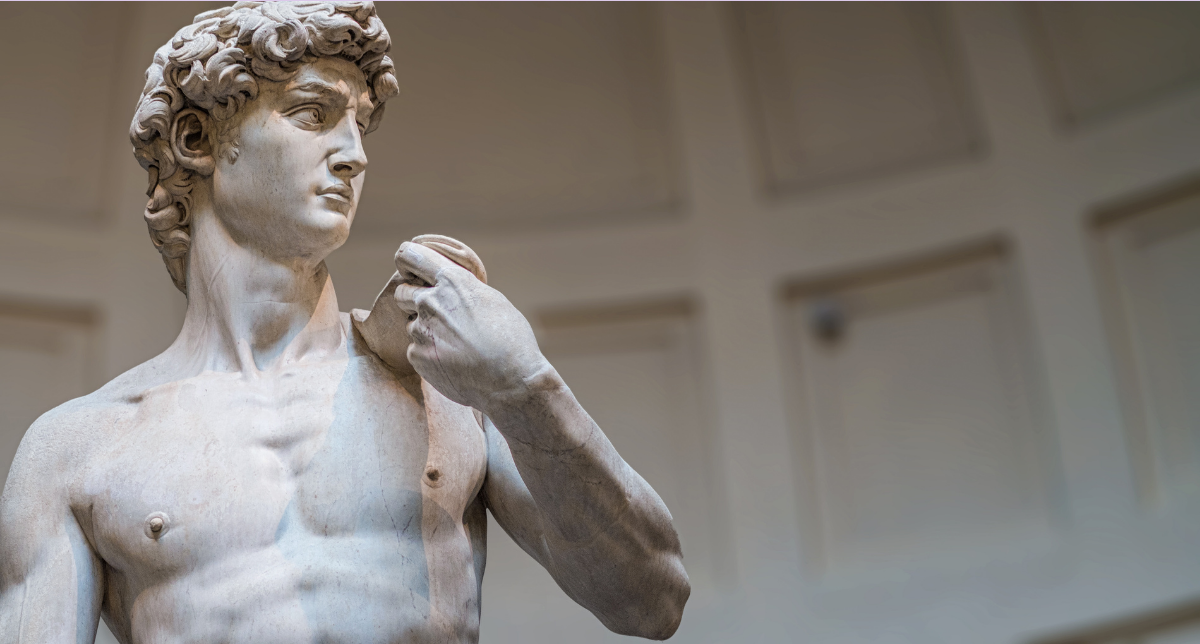
Michelangelo once said of his sculptures, "Every block of stone contains a statue inside, and it is the task of the sculptor to release it." When he unveiled his masterpiece he said, in effect, I give you David.
John opens his Gospel and says, I give you God.
Matthew starts with a genealogy. Luke starts with an investigation. Mark starts with a sprint.
John doesn't start with any of that. Before the curtain even parts, before the first flick of a spotlight, he launches the Star of his story right there in line one:
"In the beginning was the Word, and the Word was with God, and the Word was God." (John 1:1)
No guessing. No buildup. No wondering who the main character is.
This one is easy to skim past, and you shouldn't.
Matthew, Mark, and Luke use the word miracle. John deliberately uses a different expression — attesting signs, from the Greek martur, meaning "to testify that a thing is so, to give a good report."
An attesting sign authenticates something beyond itself. When an airline sends your confirmation, they're not mailing you the cushioned seat. They're confirming the seat is there and you get to sit in it.
That's what Jesus' miracles do. They confirm Him. Nothing else. As Jesus put it, "The very works that I do testify about Me, that the Father has sent Me" (John 5:36).
Here's a detail worth sitting with: martur is the same word the Risen Christ used when He commissioned the disciples — "you shall be my witnesses in Jerusalem, Judea, Samaria and even the remotest part of the earth." Read literally, that says you will be my martyrs. Over time, so many witnesses were killed for their faith that the word came to mean what it means today.
John saw more miracles than he could count. He tells us as much in his final verse: if everything Jesus did were written down in detail, "even the world itself would not contain the books."
So out of all that, why does he give us exactly seven?
Because in the Torah — the foundation of everything Jewish belief was built on — numbers were packed and layered with meaning far more than in our day. And seven signifies fullness. Entirely whole. Complete.
Seven signs is John clapping his hands like a schoolteacher: Listen up! Listen up! Jesus is fully, wholly, completely who He claims to be.
And if you're tempted to write that off as coincidence, there's a second seven. John also highlights Jesus' claims to be God seven times in seven different ways.
People love to say the devil is in the details. I'd argue God is in them, and far more often.
Picture a four-way intersection where a wreck has occurred — except instead of vehicles colliding, it's grace and truth colliding head-on in the person of Jesus Christ.
Matthew stands on one corner, up close as one of the Twelve, with very little obstructing his view. Mark is halfway down the block — close enough to be an eyewitness, but needing Peter's help nailing down the particulars. Luke never saw any of it; he arrives afterward like an investigator working a crime scene, interviewing everyone who did.
And John? John is standing in the middle of the intersection.
He was in the inner circle of three. He described himself as the one whom Jesus loved. He leaned against the breast of Christ at the Passover meal. Nobody was closer to the wreckage.
Theologians have long called John "the Gospel of belief," and for good reason. "See and believe" was John's own reaction when he entered the empty tomb (John 20:8).
That's not a byproduct of his Gospel. It's the point of it.
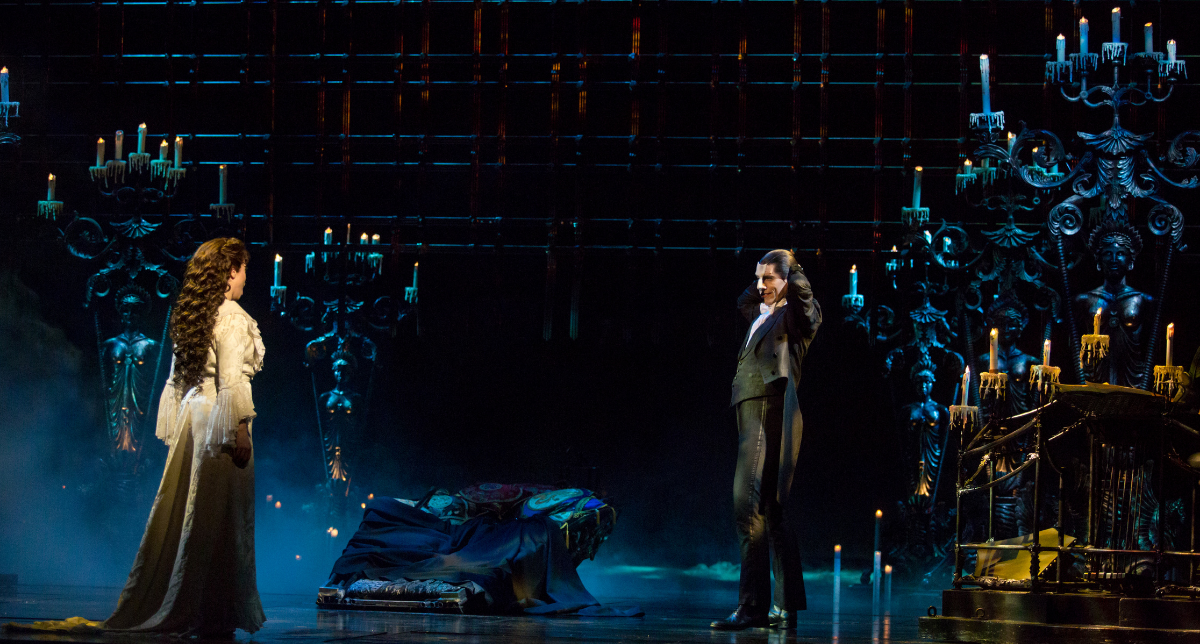
Years ago, while training for a pharmaceutical job in New Jersey, I went to see The Phantom of the Opera on Broadway. What a spectacle — that consortium of props and characters filling one grand stage.
One by one, the lesser roles would "exit stage left." In theater that phrase means a timely exit made so as not to cause a scene or draw attention to yourself.
In Phantom, it took me a while to figure out who the Star was. In John's Gospel, it takes exactly one verse.
And after that, watch how relentlessly John ushers everyone else to the wings:
Even the Temple gets moved off stage.
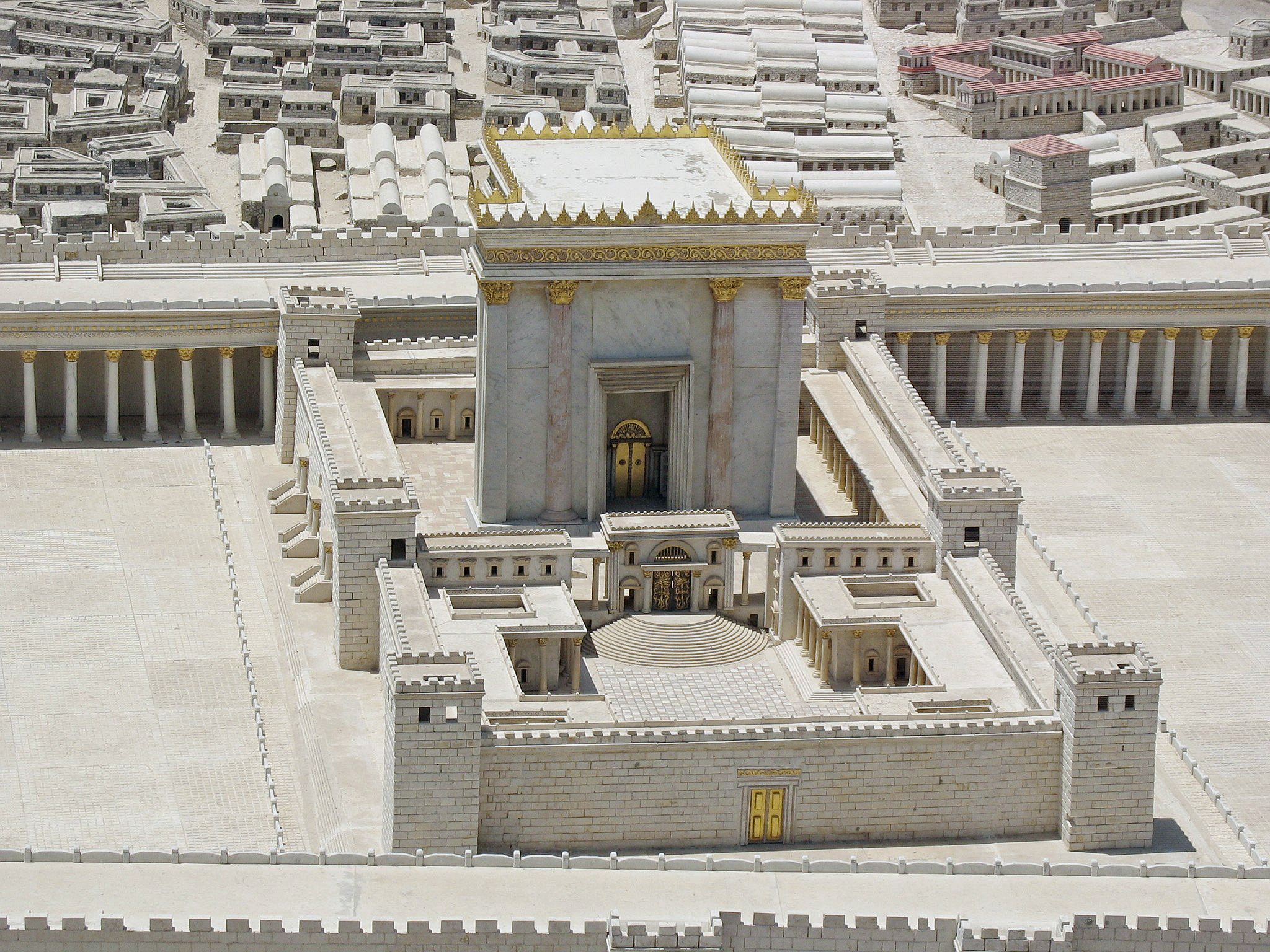
Think about the sheer size of Herod's Temple casting its shadow over Jerusalem — and how dwarfed that colossal thing looked standing next to our Lord. When Jesus overturned the moneychangers' tables and they demanded a sign, He said, "Destroy this temple, and in three days I will raise it up." They protested that it took forty-six years to build.
He was talking about His body.
The centerpiece of the entire Jewish religion had to exit stage left, because its whole purpose — pointing to the coming Messiah — was now complete. And in 70 AD, when Titus besieged Jerusalem, the bricks and mortar ceased to exist altogether.
John allows nothing and no one to distort his view of Jesus.
I've got two dachshunds, Mr. Franks and Otie, and those dogs live to chase squirrels. The far-right corner of my backyard is a varmint convention.
I'd hold them up to the windowsill, long snouts pressed to the glass, and shake and rattle like a hype song before kickoff — "Go getcha squirrel! Go getcha squirrel!" Then I'd fling the door open. Mr. Franks, the short-legged slow one, would back up first to get a running start.
A thousand attempts. And a thousand times, they flew off those back steps and tore off to the left.
Every single time, they had seen the action was to the right.

Now page through John and count how many people do the exact same thing. It's everywhere. They look over Him, past Him, beyond Him, and down on Him:
You will not find a single person in that Gospel who meets Jesus and immediately sees Him for who He is. Not one. For everybody, it's a progression.
Which brings us to John 9 and the man born blind — and watch his answers evolve as the questioning drags on:
Verse 11: Jesus is "the man" — nothing more.
Verse 17: "He is a prophet."
Verses 27-28: He calls himself a disciple, which makes Jesus his Rabbi.
Verse 33: "If this man were not from God, He could do nothing."
Verse 36: "Who is He, Lord, that I may believe in Him?"
Verse 38: "Lord, I believe." And he worshiped Him.
Do you catch what happened in that last verse? Every Jew alive knew there was only one Being you were permitted to worship. That's the first time in recorded history a person acknowledged Jesus is God.
And here's the story underneath the story: the crowd could see Jesus perfectly well with their eyes and stayed pitch dark spiritually. The blind man saw Him both ways.
He wants what those Greeks wanted when they pulled Philip aside: "Sir, we wish to see Jesus."
A.W. Tozer described how that usually goes. First a sound, as of a Presence walking in the garden. Then a voice, more intelligible but still unclear. Then the moment the Spirit starts illuminating Scripture, and what had been only a sound becomes a word — warm, intimate, clear as the word of a dear friend. Then light, and life, and best of all, the ability to see and rest in and embrace Jesus Christ as Savior and Lord.
Every one of us falls somewhere on that spectrum — spiritually blind, or cloudy, or seeing as bright as the noonday sun.
So let me ask you something. Where were you on that scale ten years ago? Twenty?
If the Lord was patient with you back then — and He was — how in the world could you not extend that same patience to somebody else now? Jesus never once browbeat that blind man for failing to see. Outright sin is one thing. Growing in grace is another thing entirely.
Jesus meets us right where we are, no matter where on that spectrum He finds us.
What matters is that we finally see and believe. That's it. And after reading the Beloved Disciple's Gospel, how could you not?
Is John considered a synoptic Gospel?
No. Matthew, Mark, and Luke are called the synoptic Gospels because they share a common perspective and much of the same material. John's account diverges from them at nearly every turn.
Why doesn't John call Jesus' miracles "miracles"?
Because he wanted the emphasis on what they prove rather than on the acts themselves. He uses "attesting signs" — a sign authenticates something beyond itself, the way a confirmation email authenticates a seat you haven't sat in yet.
Why are there seven signs in the Gospel of John?
Seven signifies fullness, wholeness, and completion in Scripture. John saw far more than seven miracles and deliberately selected that number to say Jesus is fully and completely who He claims to be. He pairs it with a second seven — Jesus claiming to be God seven times in seven different ways.


